The lens

Why a trauma approach.

Performance plateaus, anxiety, blocks, and burnout aren't willpower problems. They're a trauma response running on the subconscious — wired in by stress, injury, hard seasons, and the moments the nervous system could not move through on its own.

A trauma approach treats the performance problem at the level the program actually runs. Below language. Below insight. Below the conscious layer every other intervention reaches.

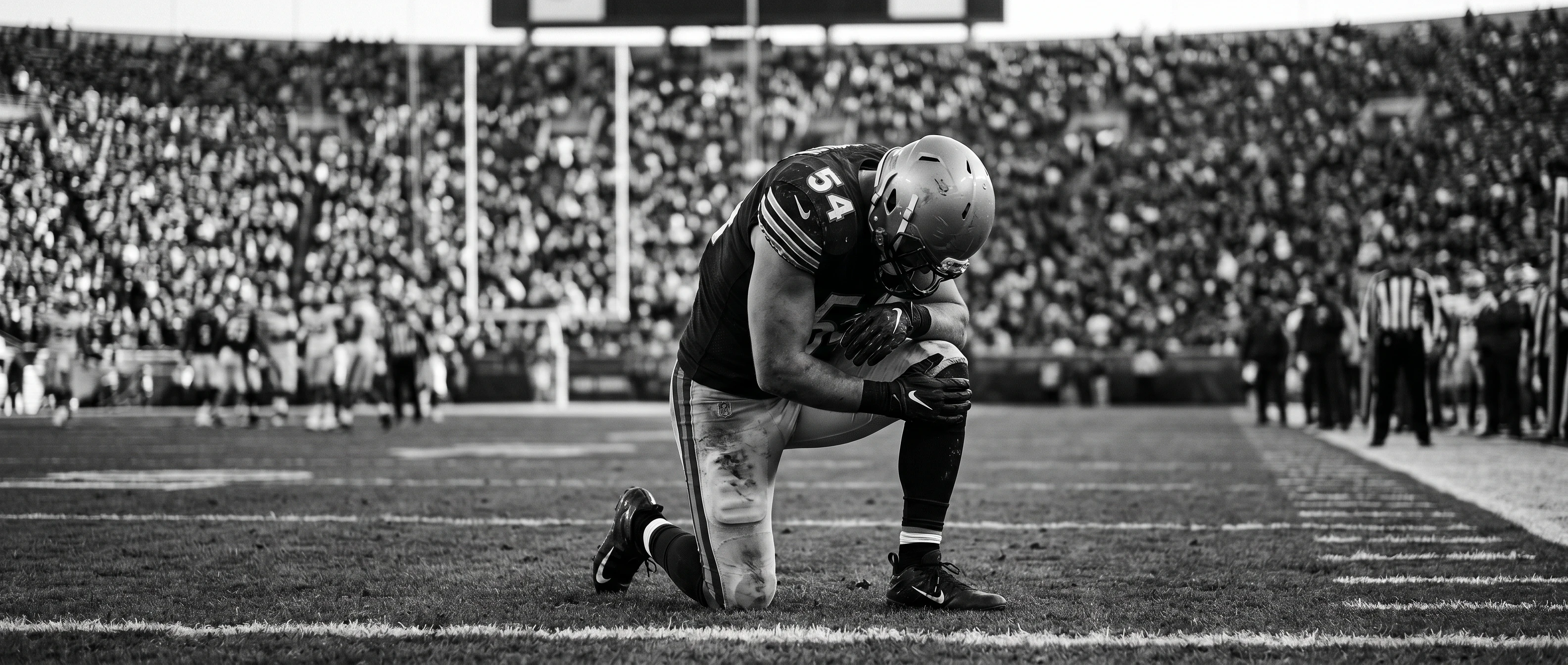
Football athlete on the field after contact — the nervous system registers the hit as survival
Reservoir · Lock-in · Reprogramming
The trauma memory reservoir

What the reservoir actually is.

The trauma memory reservoir is the part of the nervous system that holds anything the body could not safely discharge in the moment it happened. It runs online the moment a new event triggers it — and pulls the athlete out of Alpha flow and back into the defended, sympathetic, survival program that has been running underneath every performance break for years.

01

High stress while competing or training.

The nervous system experiences the demands of training and competing as direct physical threat. Cortisol floods the system, the amygdala fires, and the event gets laid down in the trauma memory reservoir — even when the conscious mind has no memory of feeling overwhelmed.

02

Watching a fellow athlete get injured in front of you.

Mirror neurons run the same neurological sequence the injured athlete is running. Watching a teammate tear an ACL, take a concussion, or go down mid-play encodes the event in the observer's reservoir — sometimes more deeply than if the observer had been the one hurt.

03

Watching a teammate make a costly error.

A bad play, a missed call, an own goal in front of a stadium. The nervous system treats the public failure as a threat to identity and belonging. The reservoir indexes it at the same intensity the athlete themselves experienced it — and pulls it up the next time the observer steps into a similar moment.

04

Believing you have messed up in the moment.

The felt sense of "I've blown it" — a missed putt, a drop at the third hurdle, a fumble on the goal line, a wrong word in the board meeting. The nervous system registers the self-perceived failure as a survival-level event, not a process moment. The reservoir stores it. The next similar moment activates the same response.

The athlete doesn't need to be injured to have a reservoir full of trauma. The nervous system is the recorder — and recording happens every time the system exceeds its capacity to integrate in real time.

What fills the reservoir

And the triggers fire again the next time.

The reservoir does not just store. It fires. Each event on record scans the present moment for a match — and the moment the nervous system finds one, the old charge reactivates inside the body before the conscious mind has any idea what is happening.

The match

Reactivation.

Each stored event carries a pattern — a sensation, a thought, a posture, a sightline. The next time the nervous system detects even a partial match, the stored event runs inside the present moment as if it is happening now. Heart rate jumps. Shoulders tighten. Vision narrows. Hand-eye breaks. The athlete is suddenly locked out of execution — and the conscious mind has no reason for why.

The result

Pattern lock.

The more a stored event fires, the deeper the pattern binds to the trigger. The athlete stops being able to perform freely and starts being able to perform only when the trigger is — by luck or design — avoided. The performance window narrows. The confidence layer thins. The athlete begins optimizing for survival, not performance.

The four responses

How the lock-in looks.

The nervous system runs one of four programs when survival takes over. The biology doesn't change between the field, the boardroom, the OR, the stage, and the studio — the four F's appear everywhere high-output work and high-stakes performance live.

01

Fight.

On the field
  • Raging at — and getting into altercations with — teammates, coaches, training staff, and opponents.
  • Irritation with the conditions, with the result, with your own output, with everyone else’s.
  • Competing with your own teammates instead of competing alongside them.
  • Determination that crosses the line — bending rules or ethics to reach the goal.
In the work
  • Raging at partners, employees, vendors, and clients. Blowups that damage the culture you are building.
  • Irritation with execution, with the pace, with the result, with everyone else’s output.
  • Competition bleeds into everything — competing with collaborators instead of leading them.
  • Cutting corners to hit the goal — compromising your own standards to finish the sprint.
02

Flight.

On the field
  • Panic before and during competition, performance, or game time.
  • Fear of getting injured, of failing publicly, of being seen as not enough.
  • Heart racing, breath shallow, extremities shaking uncontrollably prior to game time starting.
  • Contemplating quitting the sport — switching positions or switching sports altogether.
In the work
  • Panic before pitches, deadlines, board meetings, surgeries, and high-stakes calls.
  • Fear of botching the launch, of failing publicly, of losing the deal, of getting fired.
  • Heart racing, breath shallow, voice unsteady, ruminating on worst-case scenarios throughout the moment that matters.
  • Contemplating walking away from the company, the practice, the role, or the work altogether.
03

Freeze.

On the field
  • Dissociation, decreased neuromuscular ability, numbness, the yips, balking at the trigger.
  • Hesitation, delayed reaction time, disrupted movement patterns at the worst possible moment.
  • Death fixation when things aren’t going right — intrusive ideation and the rumination loop.
  • Shame around past or current performance — wide-eyed at the coach, hesitating to move or follow.
In the work
  • Dissociation, decreased executive function — brain fog, numbness, indecision when the stakes are high.
  • Hesitation, delayed response time, analysis paralysis in the moments that actually require a decision.
  • Death fixation when things aren’t going right — intrusive ideation and dark spirals about the work.
  • Shame around past decisions, hires, and outcomes — wide-eyed hearing the directive, hesitating to ship.
04

Fawn.

On the field
  • People-pleasing and an inability to access why you’re doing this or who you actually are.
  • Performing as the perfect athlete to keep coaches, parents, and teammates happy with you.
  • Denying your own intuition about what you should or shouldn’t do on the field.
  • Hyper-fixated on parental, coaching, and teammate reactions to every play you make.
In the work
  • People-pleasing and an inability to access what you actually want — or why you’re still doing this.
  • Performing as the perfect executive to keep boards, partners, and audiences happy with you.
  • Denying your own intuition about what you should or shouldn’t ship, hire, fire, or sign.
  • Hyper-fixated on investor, customer, and audience reactions to every move you make.

The biology is the same. Whether the pressure is a final, a board meeting, an OR, a release deadline, or a quarter-end number — the same four programs take over. To fully reset the nervous system and get out, you use Alpha Imprinting to reprocess, reimprint, and desensitize the past low-energy experiences — so you reprogram the system and regain your optimal energy expression of Alpha flow state.

The homeostasis reset

The nervous system gets stuck.

When the system is hit hard enough — or hit often enough — it does not return to baseline on its own. It reorganizes around the survival program. Sympathetic dominance becomes the new normal. The athlete is "fine" — and running at the survival operating system every hour of every day.

01

Trauma — or any sustained high stress — hits the system.

A hard hit. A concussion. A bad loss. A winter of arguing at home. A death in the family. A high-stakes season that ran the nervous system harder than it could recover from. The event does not need to be classified as a "trauma" for the biology to register it as one. Anything the nervous system cannot file and move through gets laid down in long-term storage.

02

Homeostasis resets to sympathetic dominance.

High beta. Adrenalized. Heart rate up. Breath shallow. Sleep deteriorated. Attention fused to threat. The brain shifts from the calm, regulated, flexible operating system it was running into a survival operating system — and that operating system becomes the new normal the nervous system defends.

03

Fight, flight, freeze, or fawn locks in.

One of four survival programs takes over. Some athletes rage. Some bolt. Some dissociate straight through moments that require full presence — and call it the yips, choking, or freezing under pressure. Some smile, comply, people-please, and disappear behind the performance. The lock-in is not a choice. It is the nervous system running the only program it can find.

04

The lock-in does not naturally reset.

This is the part most coaches, trainers, and traditional therapists miss. The body cannot simply talk, rest, or push its way out of sympathetic dominance. The more the conscious mind analyzes, the more it deepens the neuropathway. Time alone does not discharge it. The reservoir stays online — and continues firing under pressure — until the trauma is reprocessed, the nervous system is desensitized, and the new programming is installed at the subconscious level.

What the conscious mind sees

A plateau. Slumps. The yips. Inconsistent seasons. Performance anxiety. Disrupted sleep. Mood the athlete cannot explain. Recovery that does not restore.

What the nervous system is running

Sympathetic dominance. High beta. Survival program. Old reservoir firing. Defended set point. A nervous system that will not come down on its own.

Why willpower isn't enough

The programming runs below consciousness.

Performers don't need to be told to focus. They don't need to be told to try harder. The programming failing them isn't conscious — it's the part of the system producing the automatic response in the moment the conscious mind cannot reach in real time.

95–97%
Of behavior

The subconscious runs the majority of every action, reaction, decision, and physical response. Willpower, mindset work, and affirmations operate on the conscious layer — which means they reach, at best, the smallest slice of the system actually doing the work.

By age 7
Programmed

The subconscious is fully formed by early childhood. Every parent fight, every move, every loss the child could not process, every coach who shamed instead of taught — already encoded. The adult athlete is running a program written years before they ever picked up their sport.

Below language
Inaccessibility

Trauma stored in the body and subcortical brain cannot be reached by insight or understanding. You cannot think, journal, or analyze your way out of a program the conscious mind cannot see. The intervention has to land at the level the program actually runs.

Talk therapy addresses the conscious layer. Mindset work addresses the conscious layer. Affirmations address the conscious layer. None of them reach the reservoir, the defended set point, or the survival program. The intervention has to land at the level the program actually runs — otherwise the lock-in stays online.

The reprogramming process

Sounds, not psychedelics.

The same altered states cult wellness communities and clinical psychedelic research chase are reachable through trained sound patterns — without the substance, the recovery time, the legal exposure, or the risk profile. The nervous system does not care how you got it to open. It only cares that the new programming is being installed inside it.

01

Sound-based access.

Trained sound patterns carry the nervous system into the receptive state — theta, alpha — without synthetic compounds. The auditory system is the fastest route into the brain. Specific frequencies and bilateral patterns open the windows through which the subconscious becomes available, readable, and safely reprogrammable.

02

Reservoir discharge.

Inside the receptive state, the stored trauma material rises into conscious awareness — sensations, images, emotional residue. The nervous system processes and discharges it the way it needed to in the original moment. No reenactment, no reliving, no flood. The charge leaves the body because the window is finally open.

03

Reprogramming at the source.

Once the reservoir is cleared, the new wiring is installed directly into the subconscious — sport-specific neuromuscular patterns for athletes, regulation anchors for high performers. The program running 95% of automatic response is rewritten. Old triggers no longer fire. New patterns fire under pressure without conscious effort.

04

Desensitization against the next hit.

The future is not safe — and the protocol does not pretend it is. The nervous system is desensitized to the inevitable next injury, the next loss, the next public mistake, the next high-stakes moment. The capacity to absorb the hit and stay in Alpha flow — without being knocked out by an old reservoir firing — is the deliverable.

The takeaway

The nervous system doesn't need to be chemically forced into an altered state to be rewired. It needs a precise, thorough process — one that clears the reservoir, opens the programming window, installs the new wiring, and desensitizes the system against the next hit. Sound gets you there. Reprogramming finishes the job.

What a trauma approach means

And what it isn't.

Treating performance as a trauma issue is not what a lot of people assume. It does not require:

  • Synthetic psychedelics, plant medicine, or ketamine infusions.
  • Years of weekly talk therapy analyzing the same material.
  • Mindset or motivational work that addresses only the conscious layer.
  • A prescription that masks the symptoms without clearing the cause.
  • A complete break from sport or work — and a hope that time will reset the system.

It requires locating the reservoir, accessing the subconscious through sound and receptive state, discharging the stored charge, and installing the new wiring directly into the program that runs 95% of automatic behavior.

Ready when you are

Talk through what the reservoir is holding.

A short call with Dr. Paige to map what's running, whether Alpha Imprinting is the right fit, and what an energy-optimization protocol would look like for your sport or work.