


Contact
Brainspotting

Where you look affects how you feel.

Brainspotting

Brainspotting is a foundational psychotherapeutic clinical intervention for individuals healing from past trauma — physical, emotional, and environmental. Developed in 2003 by psychotherapist Dr. David Grand, it uses precise eye positions to reach the subcortical brain, where unprocessed trauma is actually stored — the place talk therapy can’t always get to.

No forced retelling. No reliving. Your gaze finds the spot; your nervous system does the healing.

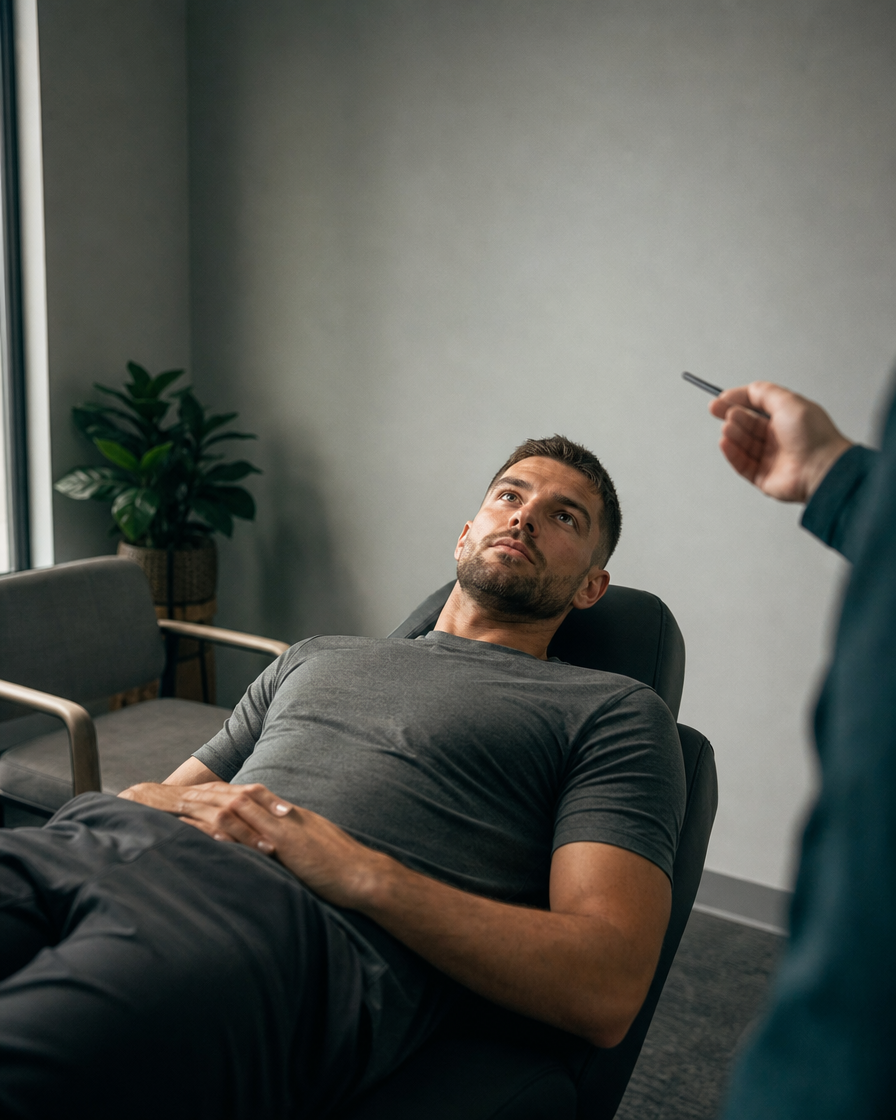
Athlete on a therapy couch following a pointer with his gaze during a Brainspotting session
Subcortical · Somatic · Focused mindfulness
One-on-one sessions

Deep processing, without reliving it.

Sessions with Dr. Paige are quiet, focused, and paced by your nervous system — not by a script. Most of the work happens internally, in stillness, while she holds the dual attunement frame: relational attunement to you, neurological attunement to what your brain is doing underneath the words.

Session details
  • Length60 minutes
  • FormatVirtual
  • ApproachNon-verbal friendly
  • First stepDiscovery call
The method

Four movements of a Brainspotting session.

01

Locate the activation

You bring the issue — a memory, a block, a body response that won’t settle. Together we rate the distress and track where it lives in the body, because in Brainspotting the body reports what the thinking mind can’t.

02

Find the brainspot

Using a pointer, Dr. Paige guides your gaze slowly across your visual field. A brainspot is the eye position that connects to the subcortical region where the unprocessed experience is held — found by watching reflexive cues: blinks, swallows, yawns, shifts in breath.

03

Hold the gaze, let it process

With your gaze held on the brainspot, focused mindfulness does the work. No forced retelling, no reliving. The nervous system processes the stored material at its own pace while the therapist stays in dual attunement with you the entire time.

04

Integrate and re-rate

Activation comes down. The memory stays, the charge doesn’t. Sessions close by re-rating distress and grounding — and the processing often continues quietly for days after the session ends.

What it works on

Built for trauma. Applied far beyond it.

PTSD & past trauma

Brainspotting was developed for trauma processing. Early pilot work showed significant PTSD symptom reduction, and negative beliefs tied to the trauma eased alongside it.

Performance blocks

The yips, the freeze before the big moment, the injury that still plays on loop. Where you look affects how you feel — and how you perform.

Anxiety & chronic activation

A nervous system stuck in high alert. Brainspotting works below the cortical level, where the survival program actually runs.

Somatic & body-held stress

Tension, pain patterns, and body responses that talk therapy can’t reach — accessed directly through the brain-body connection.

Grief & unresolved loss

The losses that never got processed — a career ended, a season lost, a person gone — held and completed at the nervous-system level.

Expansion & performance states

Not only for clearing. Expansion Brainspotting installs and strengthens resource states — flow, confidence, calm under pressure.

Beyond the session room

When the survival program stands down, the body changes too.

Trauma doesn’t only live in memory. A nervous system locked in survival mode runs the body on emergency settings — elevated cortisol, chronic inflammation, disrupted metabolism. Clearing the underlying activation lets the body come back to regulation.

Sports performance

The same mechanism that clears trauma clears performance blocks. Injuries, errors, and high-pressure moments are stored as sports traumas in the subcortical brain — surfacing as the yips, slumps, hesitation, and performance anxiety. Brainspotting releases the stored charge and, through expansion work, installs the flow states the athlete wants to fire on demand.

Autoimmune conditions

Chronic sympathetic activation keeps the immune system inflamed and the body defending itself. Many clients carrying autoimmune diagnoses are also carrying unprocessed trauma. Brainspotting is not a medical treatment — it works the nervous-system layer, downshifting the survival chemistry that keeps inflammation switched on, alongside the care of your medical team.

Metabolic health & fat loss

A defended nervous system holds weight. Chronic stress chemistry — cortisol, disrupted sleep, emotional eating patterns wired to self-soothe a triggered system — works against every diet and training plan. Clear the trauma driving the defended set point and the metabolic work you’re already doing finally has room to land.

The research

Twenty years of clinical use, a growing evidence base.

Grand, 2003 / 2013

Developed by psychotherapist Dr. David Grand in 2003 while working with trauma survivors, combining EMDR, somatic experiencing, and psychoanalysis. His book Brainspotting: The Revolutionary New Therapy for Rapid and Effective Change laid out the method.

Corrigan & Grand, 2013 — Medical Hypotheses

Proposed the mechanism: the visual field gives reflexive access to the midbrain — recruiting subcortical regions where traumatic sensorimotor memories are stored, beyond the reach of top-down talk therapy.

Hildebrand, Grand & Stembridge, 2017 — pilot study

In a clinical pilot study, clients receiving Brainspotting reported significant reductions in PTSD symptoms and in the negative beliefs tied to their trauma — suggesting a potent addition to trauma treatment.

D’Antoni et al., 2022 — Int. J. Environ. Res. Public Health

A comparative study of single 40-minute sessions found Brainspotting and EMDR comparable at reducing subjective disturbance from distressing memories — both more effective than placebo.

Talbot, de la Salle & Jaworska, 2022 — Canadian Journal of Psychiatry

Case evidence of reduced PTSD and depression symptoms, described as converging evidence for a paradigm shift in trauma treatment built on the EMDR lineage.

Where the field stands

More than 6,000 clinicians are trained worldwide. The evidence base is young — pilot and comparative studies are promising, and larger controlled trials are still needed. We present it honestly: an emerging, fast-growing clinical intervention.

Back to Academy
Academy · Professional training

Brainspotting for Sports 1.0.

Approved Brainspotting Specialty Workshops

Brainspotting for Sports 1.0 is an experiential two-day professional training designed to provide clinicians, mental performance professionals, and other qualified practitioners with a neuroscience-informed framework for applying Brainspotting to sports performance, injury recovery, and nervous-system regulation.

Note: You must register and pay via the link above. DO NOT PAY THROUGH THIS SITE. Refunds will be given less fees if this occurs.

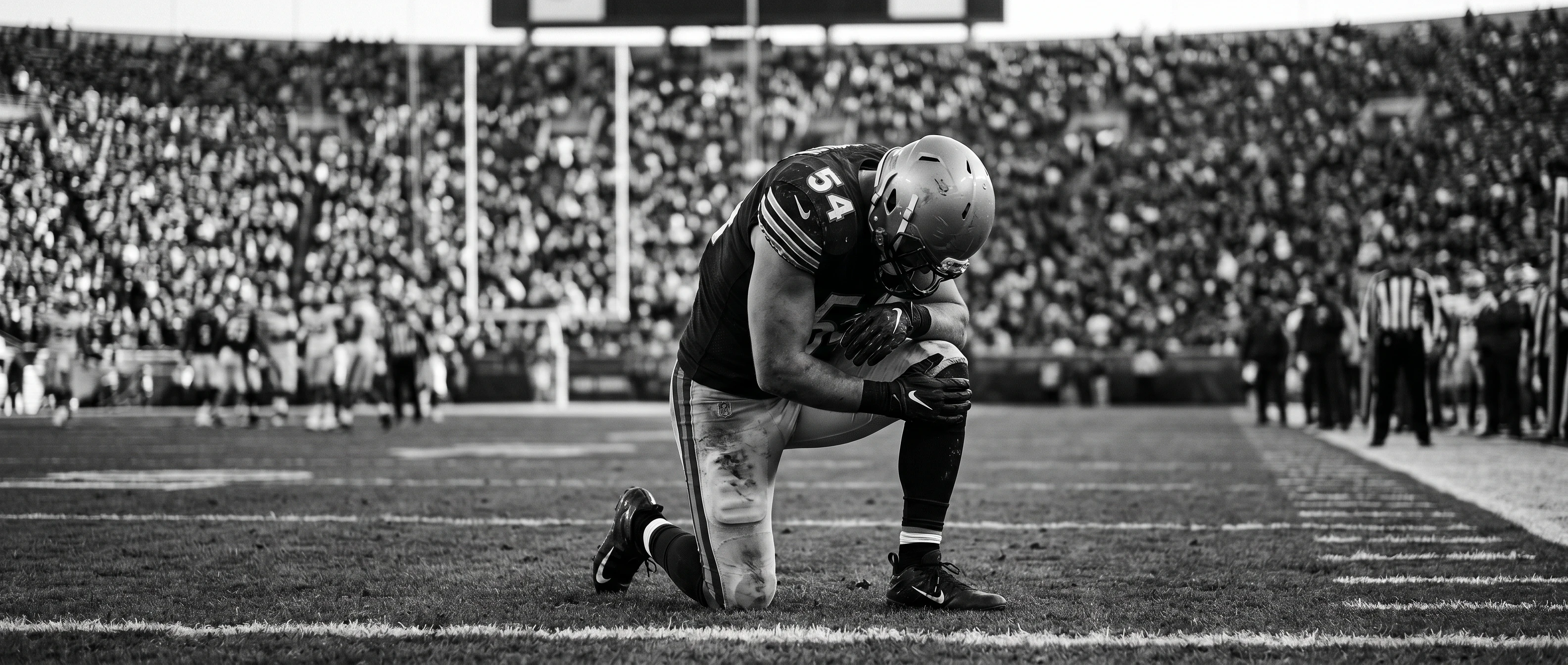
Injured football athlete on the field
Online · Two days · Lecture · 3 demos · 3 practicums
The training

Overview

Brainspotting for Sports 1.0 is an experiential two-day professional training designed to provide clinicians, mental performance professionals, and other qualified practitioners with a neuroscience-informed framework for applying Brainspotting to sports performance, injury recovery, and nervous-system regulation. Participants will explore how psychological stress, physical trauma, sports injuries, and head injuries may influence autonomic nervous-system regulation, brain states, body arousal, cognitive anxiety, movement, and performance. The training examines Brainspotting as a brain-body processing approach for identifying and working with activation associated with performance blocks, the yips, balking, injury experiences, and health-related stressors.

Participants will learn how to select, layer, pivot, and integrate Brainspotting frames while following the client’s physiological and emotional processing—the “tail of the comet.” Discussion will also explore emerging and theoretical applications of Brainspotting in relation to neuroinflammation, fascia, motor functioning, metabolic and autoimmune conditions, degenerative conditions, syndromes, and complex or unexplained symptoms, while distinguishing established evidence from developing clinical hypotheses. Through lecture, three instructor demonstrations, and three structured practicums, participants will move from conceptual understanding to direct observation and supervised experiential application.

Training details
  • Dates
    Friday & Saturday, November 6 & 7, 2026
  • Time
    9am–6pm PST each day
  • Format
    Online
  • Tuition
    $555.00
Facilitators

Paige Roberts + Laura Hillesheim

Your training flyer

A quick reference for the dates, registration, facilitators, and continuing education details.

View our Flyer
Learning outcomes

Objectives

Upon completion of this two-day training, participants will be able to:

  1. 01

    Describe foundational neuroscience concepts related to psychological and physical trauma and explain how Brainspotting is theorized to support nervous-system regulation and access states conducive to recovery and optimal performance.

  2. 02

    Explain how sports injuries, repetitive physical stress, concussion/head injury, and psychologically stressful experiences may influence autonomic regulation, arousal, attention, movement, and brain-state functioning.

  3. 03

    Differentiate physiological/body-based arousal from cognitive anxiety and identify Brainspotting strategies for addressing each presentation within sports and performance contexts.

  4. 04

    Identify clinical and emerging theoretical considerations regarding Brainspotting, stress physiology, neuroinflammation, fascia, motor functioning, metabolic and autoimmune conditions, degenerative conditions, syndromes, and complex or unexplained symptom presentations.

  5. 05

    Recognize and assess nervous-system activation associated with sports performance blocks, including the yips, balking, fear of reinjury, hesitation, and loss of automatic performance.

  6. 06

    Demonstrate the appropriate selection and application of Brainspotting frames for sports performance optimization, injury-related experiences, performance anxiety, and performance blocks.

  7. 07

    Apply layering and pivoting of Brainspotting frames while tracking client activation and processing in order to remain with the emerging clinical material or “tail of the comet.”

  8. 08

    Integrate somatic, emotional, cognitive, and performance-related information when conceptualizing Brainspotting interventions for athletes and other high performers.

  9. 09

    Communicate a clear, neuroscience-informed explanation of Brainspotting that supports informed client understanding, realistic expectations, and engagement in treatment or performance-focused work.

  10. 10

    Observe and analyze three instructor demonstrations illustrating distinct Brainspotting applications and advanced use of frames within sports performance and recovery scenarios.

  11. 11

    Complete three experiential practicums to practice Brainspotting setup, frame selection, attunement, activation tracking, layering, pivoting, and session processing.

  12. 12

    Formulate an individualized Brainspotting approach for a sports-performance or recovery presentation while remaining within the participant’s professional scope of practice.

Two-day seminar

Agenda

Training runs from 9am - 6pm PST each day.

Brainspotting for Sports 1.0

Day 1

  1. 9–10amSports & Exercise Psychology
  2. 10–11amNeuroscience
  3. 11–11:15amBreak 15 Minutes
  4. 11:15am–12:15pmMental, Physical & Environmental Traumas
  5. 12:15–1:15pmTrauma Applied to The Nervous System
  6. 1:15–2:15pmLunch 60 Minutes
  7. 2:15–3:15pmBrainspotting
  8. 3:15–4:15pmDesensitization & Reset Demonstration
  9. 4:15–4:30pmBreak 15 Minutes
  10. 4:30–6pmDesensitization & Reset Experiential
Brainspotting for Sports 1.0

Day 2

  1. 9–10:30amConcussions
  2. 10:30–11:30amReprocessing-Deconditioning-Reset Demonstration Concussion
  3. 11:30–11:45amBreak 15 Minutes
  4. 11:45am–12:45pmReprocessing-Deconditioning-Reset Experiential
  5. 12:45–1:45pmLunch 60 Minutes
  6. 1:45–2:45pmAthlete Archetypes
  7. 2:45–3:45pmDesensitization-Visualization-Optimization Demonstration
  8. 3:45–4pmBreak 15 Minutes
  9. 4–5:30pmDesensitization-Visualization-Optimization Experiential
  10. 5:30–6pmClosing questions
Additional information

Miscellaneous

Instructors

Paige Roberts

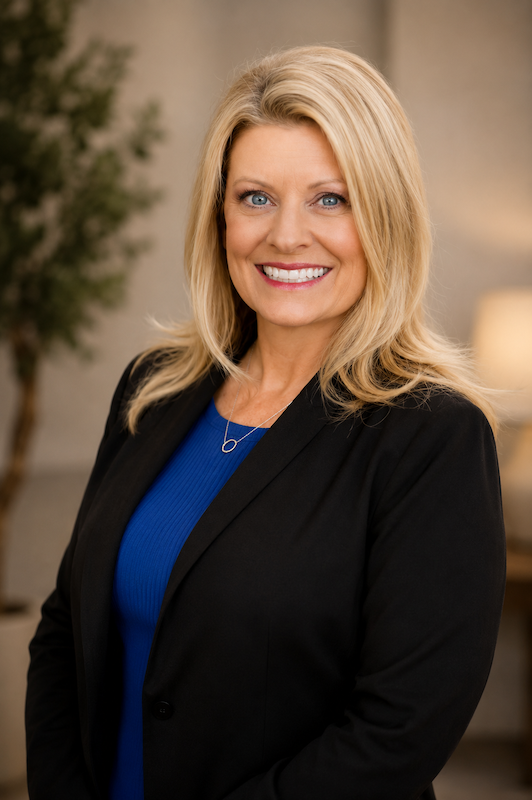
Paige Roberts, PhD, MSW

Brainspotting Trainer · Sports Performance Consultant

Paige Roberts, PhD, MSW is a sports performance consultant, Brainspotting trainer, and nervous system optimization expert who has worked with athletes and trained clinicians in applying brain-body approaches to sports performance, injury recovery, and mental blocks.

With degrees in Human Performance & Wellness, Social Work, and Integrative Health, Paige blends Brainspotting, neuroscience, and performance psychology to help athletes move beyond injuries, performance blocks, and stress patterns and access greater focus, confidence, and flow. A lifelong athlete and Colorado mountain native now based in Topanga, California, Paige brings an engaging, experiential approach to trainings, conferences, and sports performance events.
Laura Hillesheim

Laura Hillesheim, LPCC

Senior Brainspotting Trainer · Performance & Trauma Clinician

Laura Hillesheim is a licensed professional clinical counselor, senior Brainspotting trainer, and trauma-healing and performance specialist. Since being trained in Brainspotting in 2008, she has earned her Brainspotting Certification, led Brainspotting intensives for therapists, and served as a founding board member of the Midwest Brainspotting Institute.

Laura brings a compassionate, empathic, nondirective approach to her work with clients and fellow practitioners. Her training combines deep clinical experience with a genuine commitment to helping healers heal.

Our Target Audience

Classes are open to all licensed professional counselors, licensed social workers, psychologists, psychoanalysts, MFTs, Substance Abuse Counselors, and students who are curious and seek to expand their knowledge.

Accessibility

I am committed to ensuring that all our continuing education (CE) offerings meet the highest standards of accessibility. I invite you to reach out to me via the contact form or email with any specific accessibility needs or accommodations you may require. Please make me aware of your requests prior to the training to ensure an inclusive and supportive learning environment.

Grievance Policy

Participants who have a grievance related to my continuing education courses are encouraged to submit their concerns in writing via my contact form within 30 days of completing the course.

The grievance should include:

  • Participant's name and contact information.
  • Course title, date of completion, and instructor's name (if applicable).
  • Detailed description of the grievance, including relevant facts and supporting documentation, if any.
  • Desired outcome or resolution sought by the participant.

Contact

For questions or concerns, please reach out to:

Laura Hillesheim
Laura Hillesheim Therapy
info@laurahillesheimtherapy.com
(920) 609-1539
Continuing education

Continuing Education Credits

“Brainspotting for Sports 1.0” has been approved for 15 hours of continuing education through NBCC, approved provider ACEP no. 7898.

The credits are a separate purchase and include a certificate. Approval is through NBCC ACEP No. 7898 and you are responsible for verifying whether your state board/licensure will accept.

Registration

Join Paige Roberts and Laura Hillesheim for the two-day online training.

REGISTER HERE
Start here

Your nervous system already knows where the spot is. Let’s go find it.

Book a discovery call with Dr. Paige to talk through what you’re carrying and whether Brainspotting is the right door in.

Are you a clinician trained in Brainspotting seeking certification consultation? Email Dr. Paige directly.