Contact
Research · Clinical collaboration
Roberts NeurotrainingBRAIN.ONE

Measure what matters. Train what changes.

Roberts Neurotraining is collaborating with BRAIN.ONE to explore how evidence-based sports-performance and concussion-recovery modalities can move from a single measurement into a living, personalized plan.

The work connects Dr. Paige Roberts’s clinical performance practice with BRAIN.ONE’s evidence-based protocol system, behavioral change tools, biometric tracking, and human-approved insights.

Evidence-based protocols·Biometric context·Clinical judgment
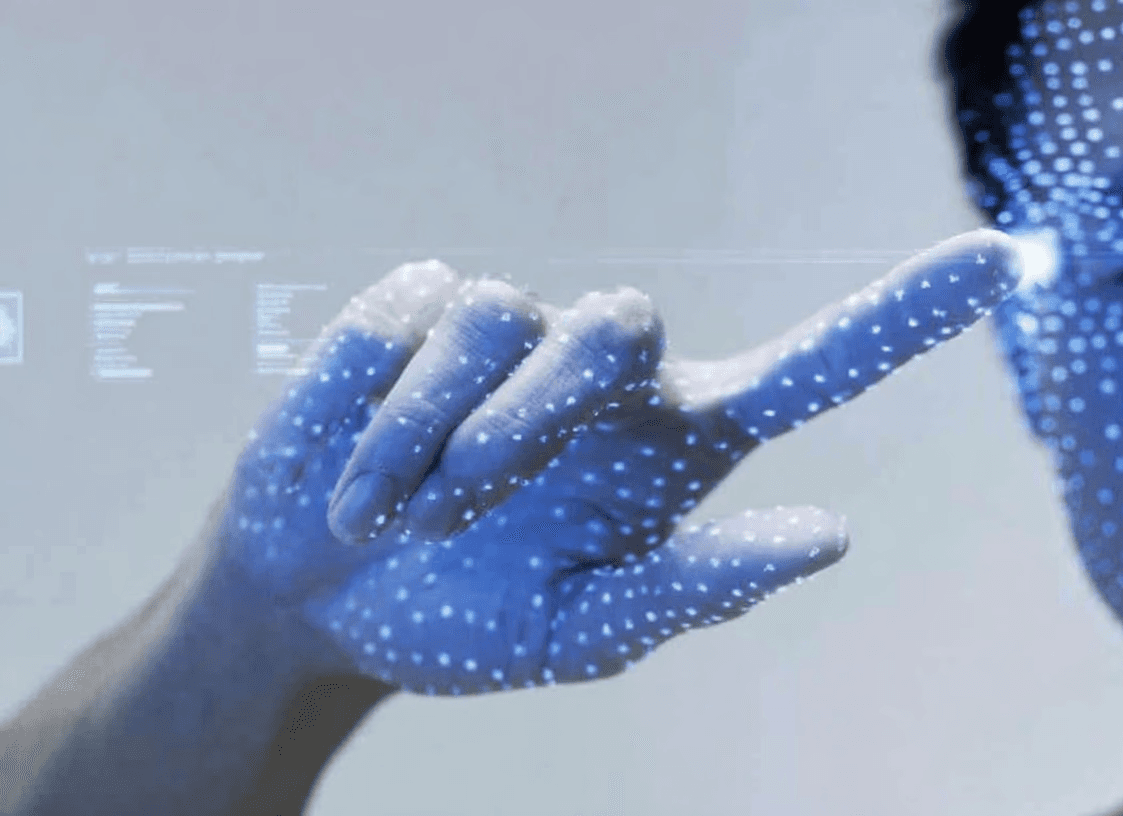
Hand interacting with a digital biometric interface
Biometric data as contextNot a diagnosis
The collaboration

A loop, not a scorecard.

The strongest signal is the one that changes the next decision. Measurement gives the team a starting point; behavior, clinical work, and repeat observation give it meaning.

BRAIN.ONE’s public platform describes a short cognitive-behavioral assessment, daily personalized microtasks, progress monitoring, and adaptive recommendations. In a clinical collaboration, those tools can make between-session work visible and actionable.
  1. 01
    Measure

    Start with a fuller picture.

    QEEG P300 scans, heart rate variability, wearable signals, face scans, biometric measures, and the athlete’s own experience can add context to performance, recovery, and concussion-related symptoms.

  2. 02
    Interpret

    Put the signal beside the person.

    Data is read alongside history, symptoms, training load, sleep, behavior, goals, and clinical judgment. A number is useful when it helps the team ask a better question—not when it pretends to be the whole answer.

  3. 03
    Implement

    Turn insight into daily change.

    Evidence-based protocols become practical actions: behavioral microhabits, performance work, concussion-recovery support, neuromodulation strategies, and dietary or nutrient considerations selected for the individual context.

  4. 04
    Adapt

    Track what changes over time.

    Check-ins, wearable trends, and repeat measures make the plan responsive. The goal is a clearer loop between what the athlete feels, what the data shows, and what the next intervention should be.

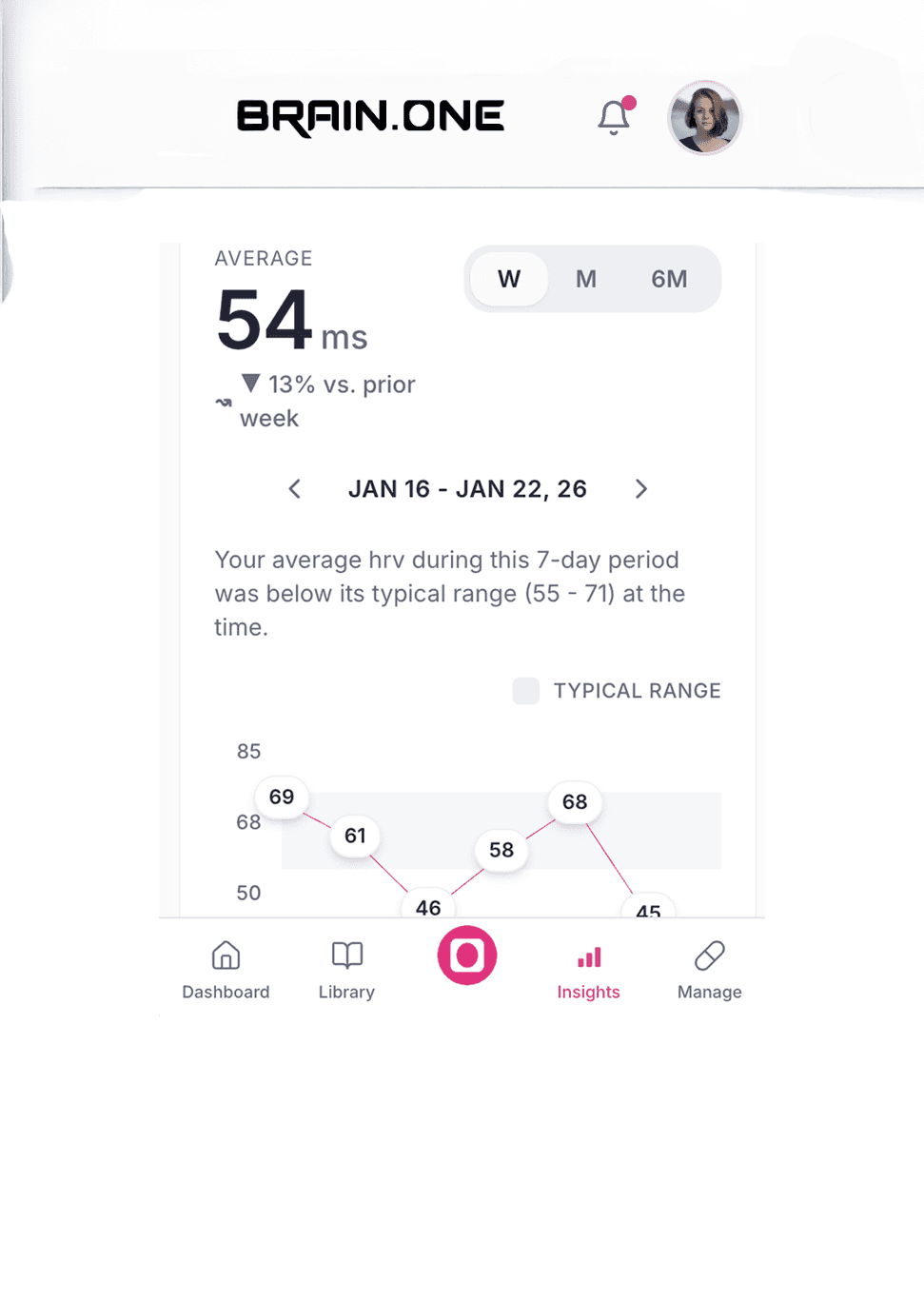
BRAIN.ONE dashboard showing daily health and recovery data
Daily signalContext over score
From dashboard to behavior

A signal that meets the day.

A wearable trend or HRV reading matters because it can change what happens next. BRAIN.ONE’s platform is designed to connect check-ins, personalized microtasks, reminders, and progress monitoring to the routines people are actually trying to build.

Observe

Look for patterns across sleep, recovery, stress, symptoms, and adherence.

Respond

Adjust the next action with the person—not just the metric—in view.

Where it applies

From the training room to the return.

Sports performance and concussion recovery ask different clinical questions. Both benefit from a clear view of the brain-body system, the behavior around it, and the changes that hold over time.

01

Evidence-based sports performance

Performance is more than a result on a scoreboard. The collaboration looks at the systems beneath the result—focus, reaction time, decision-making, stress resilience, sleep, recovery, and the behavior that makes a protocol repeatable.

  • Translate measurements into sport-specific priorities.
  • Pair daily behavior change with the work happening in session.
  • Watch trends instead of overreacting to a single day.
02

Concussion recovery support

Concussion recovery needs a coordinated view of brain function, autonomic regulation, behavior, and the athlete’s lived symptoms. Baselines, repeat measures, QEEG P300 scans, HRV trends, and clinical check-ins can help inform recovery conversations alongside qualified medical care.

  • Use objective measures to add context to the recovery story.
  • Support the behavioral work between appointments.
  • Keep return-to-play decisions with the appropriate medical team.

Measurement can support a recovery conversation; it does not replace a medical assessment, diagnosis, treatment plan, or return-to-play clearance from the appropriate qualified professional.

The modality map

More than one signal. More than one lever.

The brain and body do not perform in separate lanes. These are the inputs and interventions in the collaboration’s working conversation—selected with context, not stacked for the sake of more data.

01
Biometric context

Face scans

Facial scanning can be considered as a non-invasive biometric input when appropriate. It adds another layer of context to stress, recovery, and behavior; it is not interpreted in isolation.

02
Autonomic recovery

Heart rate variability

HRV trends can help contextualize autonomic recovery, training readiness, sleep, and stress. The useful signal is the pattern over time—not a single score.

03
Daily data

Wearable integrations

BRAIN.ONE describes compatibility with leading biometric wearables. Relevant wearable data can keep recovery and performance conversations connected to daily life.

04
Brain function

QEEG P300 brain scans

Roberts Neurotraining’s QEEG work uses P300 protocols to examine brain function, including reaction time, neural energy, blood flow, and communication between regions.

05
Evidence in practice

Behavioral change

BRAIN.ONE starts with a short cognitive-behavioral assessment, then translates evidence-based protocols into daily personalized microtasks, reminders, and check-ins.

06
Performance translation

Neuroperformance

Use the data to sharpen the things sport actually demands: attention, reaction time, decision-making, resilience, and the ability to return to a regulated state.

07
Targeted support

Neuromodulation

Neuromodulation strategies can be considered within the larger plan, with the modality, dose, and scope matched to the person and the clinical context.

08
Whole-person view

Biometric measures

Subjective experience and objective metrics belong in the same room. Biometrics add context; they do not replace history, observation, or clinical judgment.

09
Foundational biology

Dietary + nutrient supplementation

Dietary foundations and nutrient supplementation may support brain-body function as part of an individualized plan, with qualified clinical guidance and attention to interactions and needs.

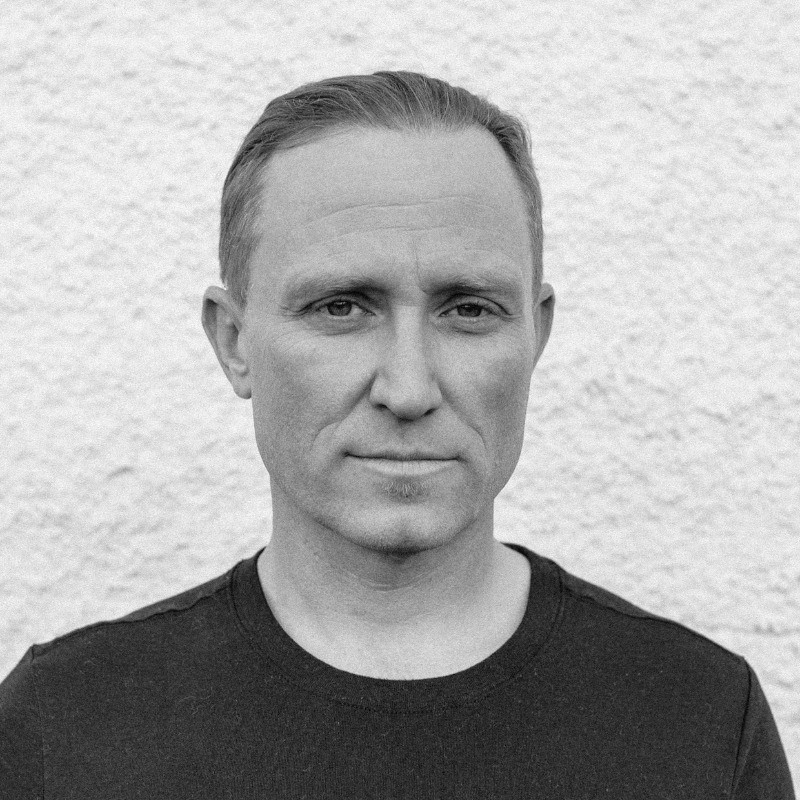
Thoryn Stephens, CEO of BRAIN.ONE
BRAIN.ONE · Our teamColorado
Meet the partner
BRAIN.ONE

Thoryn Stephens.

Founder & CEO · BRAIN.ONE

Thoryn Stephens is a molecular biologist turned data scientist based in Colorado. He spent years as a drug-development researcher in biotech before moving into data science and digital measurement.

His work brings together molecular biology, healthcare, human physiology, performance, and data-driven optimization. He founded BRAIN.ONE around a science-backed brain and nervous system information resource that connects personalized protocols, performance tracking, biometric data, and behavioral insights.

That bridge between complex health information and practical daily action is the foundation of this collaboration with Roberts Neurotraining.

Meet the BRAIN.ONE team
The standard

Evidence first. Human always.

BRAIN.ONE describes its protocols as grounded in behavioral science and built from research, with human approval. The clinical collaboration extends that principle: use measurement to inform care, not to make promises data cannot keep.

Evidence-based

Use research-backed protocols and clearly name what is known, what is being measured, and what is still emerging.

Human-approved

Keep the person, the clinician, and the athlete’s goals in the room when a dashboard or device supplies a signal.

Clinically grounded

Integrate performance practice, concussion-recovery support, and appropriate medical care without confusing one for another.

Next step

Make the invisible more actionable.

If you are an athlete, team, clinician, or performance partner, start with the question beneath the number. Dr. Paige can help map the right clinical, performance, and recovery conversation.

The working principle

Measure. Interpret. Implement. Adapt.